
Artist Statement
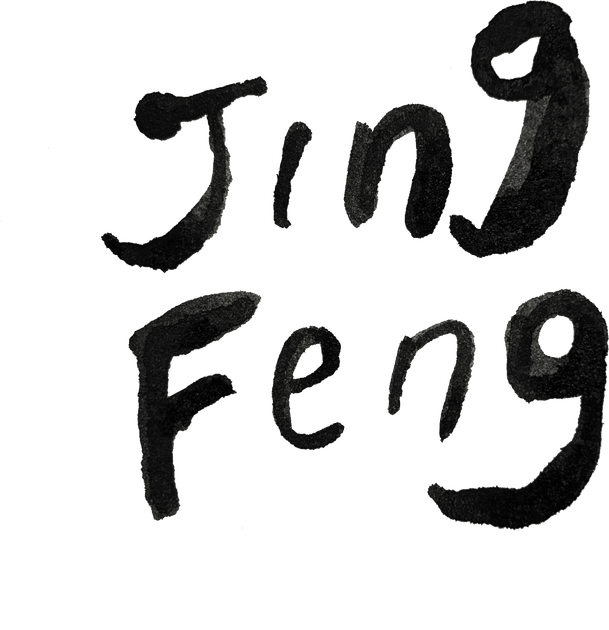
Jing Feng
My work begins with a fascination with space—not simply as something we occupy, but as something through which we experience the world. I am interested in the tension between the stability of a physical space and the instability of human experience within it. A room, a table, or a chair can remain in place while the people, relationships, and emotions that pass through it are constantly changing.
In my Empty Space series, I return to dining spaces: tables, chairs, glasses, tableware, and the spaces surrounding them. I am drawn to the dining table as a familiar social structure that can hold contradictory possibilities. It can suggest intimacy and distance, gathering and separation, presence and absence. I do not use the table to describe a particular place or story, but as a way of entering a more ambiguous psychological space.Repetition is central to this process. I return to similar objects and arrangements, but each painting shifts the conditions of looking. Recently, I have become increasingly interested in glass, reflection, transparency, and shadow as ways of disrupting a fixed view. Interior and exterior spaces overlap; reflections distort and reconstruct familiar objects; fragments of different spaces exist simultaneously within the same image. I use these elements to create a state that is recognizable but never completely stable—a kind of uncertain clarity.
I also think carefully about how the viewer’s gaze moves through the painting. I construct visual relationships that invite the eye to move from a glass to the table, into the larger space, through a reflection, and back again. Rather than offering a single, stable point of entry, I want the viewer to search, pause, return, and become aware of their own movement within the image. In this sense, the painting becomes a space to move through rather than simply an image to look at.
What interests me is not communicating one specific emotion, but allowing a psychological state to exist before it is named. The spaces I paint can carry loneliness, intimacy, anticipation, distance, or something more difficult to identify, without settling into any one of them. I am interested in this suspension—the moment when something feels present but remains unresolved.
This question is beginning to extend into my recent paintings of the body in space. If I have been asking how the eye moves through a painted space, I am now beginning to ask what changes when the body itself occupies it. Painting, for me, becomes a way of investigating not only what a space looks like, but how it is felt, entered, and experienced.